News & Innovation

Simplex Releases Its First Sustainability Report

At Simplex, we believe that a repeated action can become a habit. And that a habit can become a Reflex. This idea guides our approach to sustainability: continuously improving the way we do things, measuring our impact, and moving forward. With our first 2025 Sustainability Report, we’re taking a transparent look at the progress we’ve made, the results we’ve achieved, and the challenges that still lie ahead. Here are a few highlights that show how our commitments are turning into concrete action, one step at a time.

Measuring Our Progress to Keep Moving Forward

This first report isn’t a finish line. It’s a snapshot of where we are in our sustainability journey.

Our sustainability plan includes 6 key commitments, 15 objectives, 15 targets, and 44 strategic actions. Some targets have been achieved, others are in progress, and some still require more work.

We’ve chosen to measure our progress, document what we learn, and be transparent about the challenges we encounter. Because a more sustainable future isn’t built through one big action.

It’s built through the Reflexes we develop, one step at a time.

Reducing Emissions, One Kilometre at a Time

Transportation is an important part of our environmental approach. Our goal is to reduce GHG emissions from our own vehicle fleet by 40% by 2030.

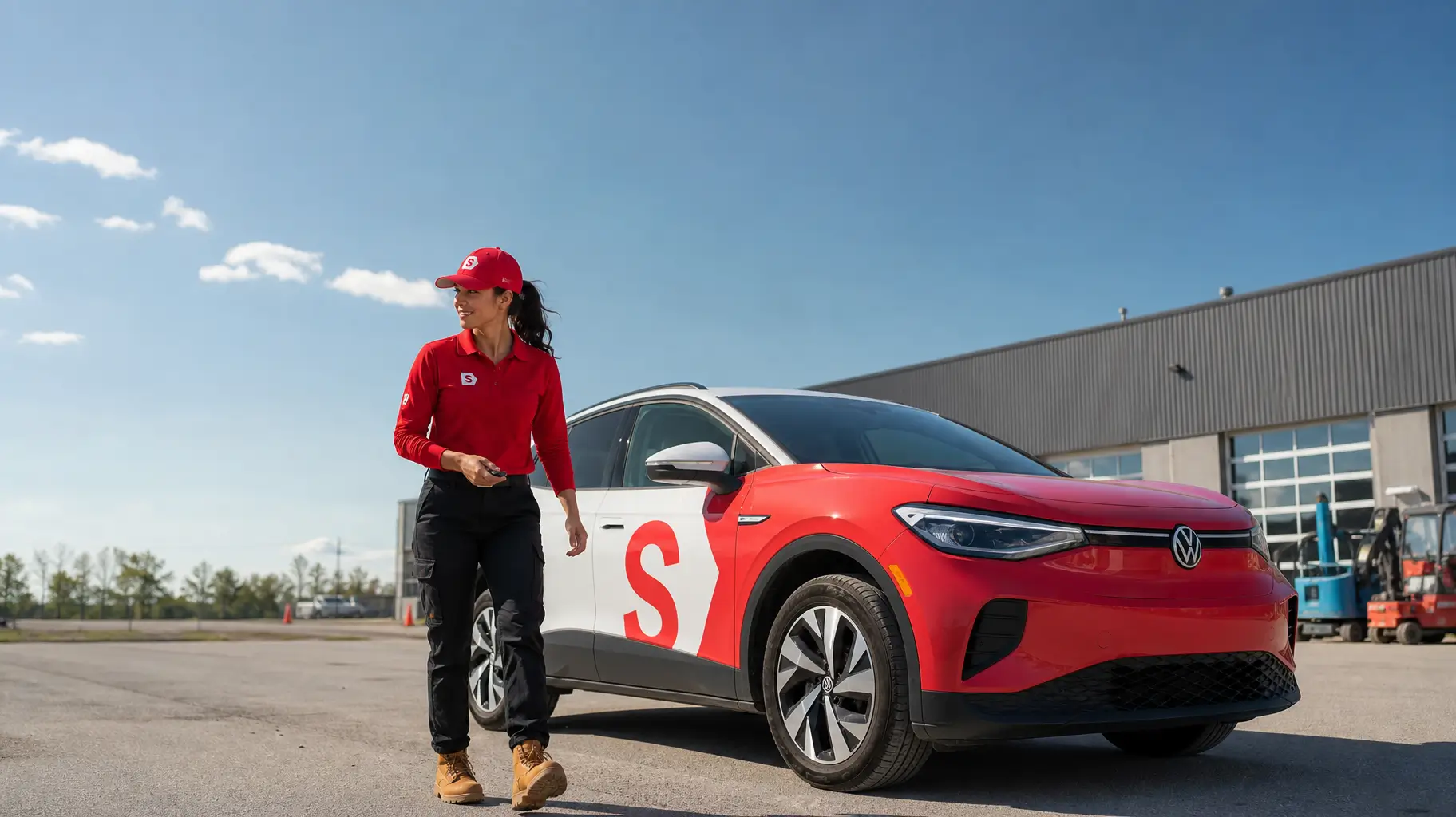
Between 2023 and 2025, estimated emissions from our vehicle fleet decreased by 37.6%, mainly due to the electrification of our light-duty vehicles.

Reducing Emissions, One Kilometre at a Time

Transportation is an important part of our environmental approach. Our goal is to reduce GHG emissions from our own vehicle fleet by 40% by 2030.

Between 2023 and 2025, estimated emissions from our vehicle fleet decreased by 37.6%, mainly due to the electrification of our light-duty vehicles.

Evolving Our Equipment Fleet

Our sustainability approach also extends to the tools and equipment we make available for rent.

In November 2025, 56.02% of the equipment included in our classification was zero-emission, representing 2,349 pieces of equipment out of 4,193.

We have also increased our use of biodegradable hydraulic oil. In 2025, 1,088 pieces of equipment, or 24.85% of the applicable fleet, used biodegradable hydraulic oil, including scissor lift, boom lifts, and forklifts.

Our purchasing decisions also take into account criteria such as durability, repairability, and parts availability. By extending the lifespan of our equipment and making the most of the resources we already have, we’re following an approach that naturally aligns with our business: prioritizing access over ownership and maximizing the value of our resources.

Putting People at the Heart of Our Approach

Sustainability goes beyond the environment. People are at the heart of our approach.

Well-being, skills development, health and safety, ethics, and workplace culture are all integral parts of our plan.

Our employee turnover rate decreased from 42% in 2023 to 27% in 2025. And in 2025, our employees received an average of 20.1 hours of training, exceeding our annual target of at least eight hours per employee.

However, some well-being and health and safety indicators declined in 2025. We don’t want to overlook these results: actions have been put in place to address them.

Because measuring our progress also means recognizing where there is still work to be done.

Supporting the Communities Around Us

Our business can also help support the communities around us.

In 2024, we reached our target of giving back 1% of our net profits to the community through monetary donations and equipment loans.

This commitment also takes shape through initiatives such as Le Lopin, which aims to transform a vacant lot in the Acadie/Sauvé area into a green community space, as well as our collaboration with La Ferme de Rue through the On nourrit notre monde project.

In other words, there are many ways to equip those who build the future.

Our Key Results at a Glance

  • 37.6% fewer GHG emissions from our vehicles between 2023 and 2025, thanks in part to the progressive electrification of our light-duty vehicle fleet.
  • 30 light-duty electric vehicles were part of our fleet in 2025.
  • 1,088 rental units, representing 24.85% of the applicable fleet, used biodegradable hydraulic oil in 2025.
  • 1% of Simplex’s net profits was given back to the community in 2024 through monetary donations and equipment loans.

What Are Simplex’s Main Sustainability Objectives?

What Is Simplex’s 2025 Sustainability Report?

The 2025 Sustainability Report provides an overview of Simplex’s sustainability journey, the actions we’ve taken, and the results achieved. It covers six key areas: GHG emissions reduction, responsible procurement, responsible consumption, a people-centred culture, philanthropy, and sound governance.

What Are Simplex’s Main Sustainability Objectives?

Simplex’s sustainability plan includes 6 key commitments, 15 objectives, 15 targets, and 44 strategic actions. These include reducing GHG emissions, improving procurement and consumption practices, supporting employees and communities, and ensuring the company’s commitments are properly monitored.

Why Does Tool and Equipment Rental Support a Circular Economy?

Simplex’s business model is based on access to a product rather than ownership. Rental allows multiple users to access tools and equipment based on their needs, an approach that aligns with the principles of the functional economy and cooperation outlined in the report.